
Subdividing Land in Auckland: Costs, Consents and the 2026 Process
By Last updated: May 2026.
Quick answer: Subdividing land in Auckland in 2026 typically costs $140,000–$190,000 per lot for a straightforward two-lot subdivision and takes 6–12 months from feasibility to new titles. But the regulatory framework changed in late 2025 — MDRS no longer applies, Plan Change 120 (PC120) is in transition, and not every section can subdivide anymore. Site-specific feasibility is the only reliable answer.
If you’re sitting on a larger-than-average section in Auckland and wondering whether to subdivide, three questions usually decide it. Can the rules actually allow it on your property? What’s it going to cost from start to finish? And what could go wrong along the way?
The answers used to be simpler. From 2022 until October 2025, the Medium Density Residential Standards (MDRS) gave most Auckland residential sections an as-of-right pathway to three dwellings of three storeys. The rule of thumb fit on a coaster. That’s no longer the case.
Auckland Council withdrew MDRS on 9 October 2025 and replaced it with Plan Change 120 (PC120), a more targeted framework that concentrates density around transit hubs and pulls back from hazard-prone land. Around 12,000 properties have been downzoned for flood, coastal and landslide risk. Some PC120 rules already have legal force. Others are still working through hearings. We’ve covered that shift in detail in our MDRS-to-PC120 explainer — this article doesn’t re-explain the rules. It focuses on the process and economics of actually executing a subdivision under the new framework.
This is the piece for the early-stage section owner working out whether subdivision is realistic. For the intermediate developer pressure-testing cost assumptions. And for the homeowner who’s heard subdivision can go sideways and wants to know how. We’ll cover the 8-step process from feasibility to new titles, the three consents you might need, the verified 2026 cost ranges itemised against actual Auckland Council and Watercare fees, the timeline that’s realistic in current council conditions, the six risks that catch most people out, and the situations where subdivision genuinely doesn’t make sense for your section.
Where you sit at the end is up to you. But you should at least know what you’re signing up for.
What Subdivision Actually Means (and Whether It’s Right for Your Section in 2026)
Subdivision is the legal process of dividing one section into two or more separate parcels of land, each with its own Record of Title from Land Information New Zealand (LINZ). Once complete, each new section can be sold, mortgaged, gifted or developed independently of the others. The title is the asset. Everything else — the consent, the survey, the infrastructure — is the work it takes to get there.
There are three common reasons Auckland homeowners take this path.
Capital release without leaving the home
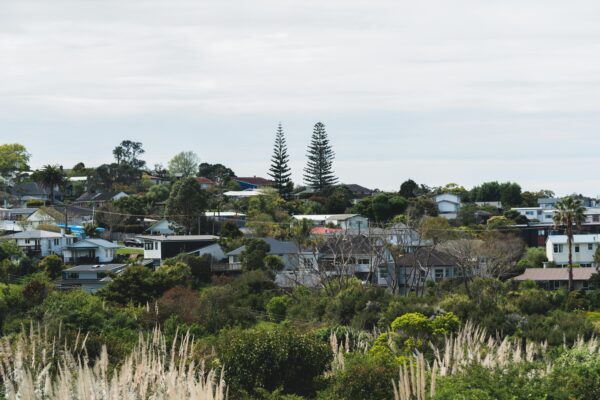
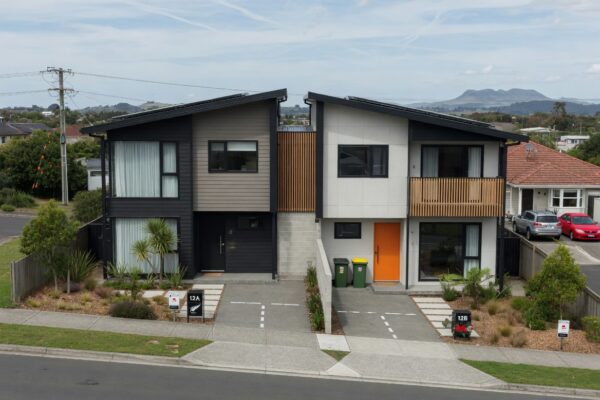
The most common scenario we see. A homeowner has a 700–900m² section in an established suburb — Mt Eden, Remuera, Henderson, Glen Eden — with the existing home sitting forward on the lot and a big rear yard that’s nice to have but isn’t doing much. Subdividing creates a second saleable title, often at the rear, which can be sold to a builder or developer to clear a chunk of mortgage or fund the next stage of life. The original home stays.
Building to sell or rent
The second new title doesn’t have to be sold as bare land. If the budget supports it, the same homeowner might build a new dwelling on the rear lot — to sell at completion, to rent, or to give to family. The economics are different in each case, and the tax treatment is different too. A property lawyer and accountant need to be involved early.
Family transfer
Less common but still real — parents subdividing off part of a section to create a separate title for an adult child to build on. The subdivision itself is just the legal mechanism. The arrangement around how it’s funded and titled is usually handled by the family lawyer.
💡 Homeowner tip: Not every section can or should be subdivided, even when the section size looks right. Zoning, hazard overlays, qualifying matters, and Watercare capacity all weigh in. The size of your lawn is the easiest factor to assess — and the least decisive one.
The bigger 2026 question isn’t whether you want to subdivide. It’s whether your specific property still allows it under the post-MDRS framework. Under PC120, two sections on the same street can return completely different feasibility answers depending on which overlays apply. A flat 750m² section in the modified Mixed Housing Urban zone with no hazard overlays might still support three dwellings as a permitted activity. The same-sized section two streets away, sitting on a flood plain or in a Special Character Area, might be more restricted than it was a year ago.
That’s why site-specific feasibility has moved from a nice-to-have to the first real step. We’ll come back to it.
The 8-Step Subdivision Process in Auckland
Most subdivisions follow the same eight steps. The timing of each varies depending on site complexity, council workload, and how cleanly the design and consenting strategy come together. Here’s what each step involves in practice in 2026.
Step 1 — Define the goal (1–2 weeks)
Before anything else, you need to be honest about what you’re trying to achieve. Sell off a back section for $X to clear the mortgage? Build a new dwelling and rent it? Create a section for one of your kids to build on? The goal shapes everything that follows — the design, the funding, the legal structure, even the order of approvals.
Step 2 — Feasibility study (1–2 weeks)
This is the gate. A licensed architectural designer, planner or surveyor checks your section against the four feasibility layers: zone (under the modified Auckland Unitary Plan and PC120), hazard overlays (flood plain, coastal inundation, coastal erosion, landslide), qualifying matters (heritage, Special Character, infrastructure capacity), and Watercare capacity in your street. Our free feasibility report covers exactly this. If any of the four layers are a hard “no”, you save yourself five and six figures by stopping here.
Step 3 — Design and consenting strategy (12–16 weeks)
If feasibility comes back positive, an architectural designer takes the brief into design. For most residential subdivisions this means a site plan showing the new lot boundaries, building envelopes, vehicle access, services routing, and any retaining structures or earthworks. If new dwellings are part of the project, the dwelling design runs in parallel. The architectural design process usually breaks into concept, developed and detailed stages — with you signing off at each gate before further fees are spent.
Step 4 — Resource consent (4–8 weeks for non-notified)
Resource consent is the council’s permission to use your land in this way. Almost every subdivision needs one. The application is lodged through Auckland Council’s e-consent portal with the survey scheme plan, planning report, and any specialist reports (geotech, stormwater, traffic) the site needs. Non-notified consents — where the council decides the application doesn’t need public consultation — typically take 20 working days of council clock time. Notified consents take significantly longer, can be appealed, and need a different level of preparation.
Step 5 — Engineering Plan Approval (4–8 weeks)
If your subdivision involves new infrastructure — new stormwater drains, wastewater connections, a new vehicle crossing, retaining walls — those engineering plans need separate approval from Auckland Council before any work goes in the ground. This step often runs in parallel with the next.
Step 6 — Building consent (6–8 weeks)
If the project includes any building work — a new dwelling, a relocated dwelling, a retaining wall above the Schedule 1 exempt threshold (Schedule 1 of the Building Act 2004 lists building work that doesn’t need a building consent, within size and value limits) — you’ll need a separate building consent. This is what Auckland Council reviews against the New Zealand Building Code. Building consent is separate from resource consent and answers a different question: is the construction itself compliant with the Code? Auckland Council’s e-consent target is 20 working days, although complex applications, requests for further information, and any back-and-forth extend that meaningfully.
Step 7 — Site works (15–18 weeks for two-lot)
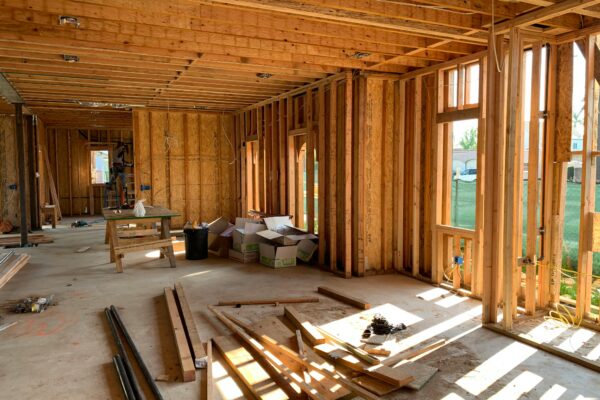
This is the dirt-moving stage. New service connections to the boundary, vehicle crossing, retaining walls, any earthworks, and — if a new dwelling is part of the project — the build itself. For a bare-land two-lot subdivision without a new dwelling, this is typically 4–6 weeks of civil works. Add a new build and you’re looking at 12–18 months on top.
Step 8 — Final survey, s224c and new titles (8–10 weeks)
Once site works are complete, the surveyor pegs the new boundaries, signs off the s223 certificate (boundaries match the consent), and applies for a s224c certificate (all consent conditions met). The lawyer then lodges with LINZ to issue the new Records of Title. When the LINZ titles arrive in your inbox, the subdivision is legally complete and the new section can be sold, transferred or built on independently.
💡 Homeowner tip: The biggest delay risk isn’t the council — it’s incomplete applications going back and forth with requests for further information. Every back-and-forth is two to three weeks of extra clock time. A well-prepared application from an experienced team is the cheapest insurance against timeline blowout.
The Three Consents You Might Need
Subdivision projects sit at the intersection of three different consenting regimes. Most projects need one. Many need two. Some need all three. Knowing which applies before you start is one of the cheapest cost-saving moves available.
Subdivision consent
This is the type of resource consent that authorises the actual division of land into separate titles. Every Auckland subdivision needs one. Auckland Council assesses it against the Auckland Unitary Plan rules for the relevant zone, including any modifications introduced under PC120. A subdivision consent application typically includes a scheme plan from a licensed cadastral surveyor, a planning assessment, and any specialist reports the council requires for that site.
Land Use Consent
You need a Land Use Consent — also a type of resource consent — when your proposed development breaches any of the rules in your zone. Common triggers in Auckland subdivisions include exceeding the maximum building height, breaching height-in-relation-to-boundary controls, building inside the front, side or rear yard setbacks, infringing daylight admission planes, or proposing more than the permitted number of dwellings on the site. Land Use Consents and Subdivision Consents are often bundled into a single application.
Building Consent
Building consent is separate from resource consent. Resource consent is about whether your project is allowed on your land. Building consent is about whether the construction itself meets the New Zealand Building Code. You don’t need building consent for the subdivision itself — but you do need it for almost any associated construction: new dwellings, retaining walls over 1.5m, new vehicle crossings of substantial size, new wet areas. If your subdivision creates a bare lot with no building work attached, no building consent is needed at this stage.
Important: Since 9 October 2025, the MDRS “three units as permitted activity” pathway no longer applies in Auckland. Every subdivision and intensification project now requires a case-by-case feasibility check against current Auckland Unitary Plan zoning, PC120 hazard overlays, and qualifying matters. Check your property in the Auckland Council PC120 page before assuming any development pathway.
“Most homeowners who come to us with a subdivision idea have already done their own zoning check on the Unitary Plan map. The problem is, the Unitary Plan map alone doesn’t show you the PC120 overlays, the Watercare capacity picture, or the qualifying matters that constrain what’s actually buildable. The map check is the start of feasibility, not the end of it.”
— Sonder Architecture Team
How Much Does It Cost to Subdivide Land in Auckland in 2026?
For a straightforward two-lot residential subdivision in standard Auckland in 2026, expect $140,000 to $190,000 per lot, all-in, before any construction. For Investment Priority Area properties (Drury, Māngere, Mt Roskill, Tāmaki, Red Hills, Westgate, Whenuapai), add roughly $28,000 per lot for the development contribution differential. For complex sites — hill country, hazard overlays, capacity-constrained streets — costs can climb to $200,000–$280,000 per lot or more.
The wide range reflects how site-specific these projects are. Slope, soil, services proximity, retaining wall requirements, and the number of new titles being created all move the number materially. Here’s how the costs typically break down.
Itemised 2026 cost components
| Cost item | Typical range (2026) | Notes |
|---|---|---|
| Feasibility report | $0–$2,000 | Free with Sonder Architecture; paid elsewhere |
| Licensed cadastral surveyor | $8,000–$18,000 | Scheme plan, boundary pegging, s223/s224c |
| Architectural design (if building) | 8–15% of build cost | Skip if bare-land subdivision only |
| Planning consultant | $5,000–$12,000 | Resource consent application |
| Engineering and specialist reports | $5,000–$20,000+ | Stormwater, geotech, traffic if needed |
| Auckland Council consent fees | $5,000–$15,000+ | Subdivision + land use; more if notified |
| Development Contributions (standard) | ~$20,000 + GST per HUE | 2025/26 rate; rising 2% annually |
| Development Contributions (IPA) | ~$48,000 per HUE | Investment Priority Area suburbs |
| Watercare IGC | Varies by network | Per residential unit; check current rates |
| Infrastructure connections | $15,000–$50,000+ | Water, wastewater, power, comms, driveway |
| Earthworks and retaining | $10,000–$60,000+ | Highly site-specific |
| Legal fees | $5,000–$10,000 | Higher for complex titles |
| LINZ titles | ~$500–$1,500 per title | Per new Record of Title |
| Total — standard two-lot, per lot | $140,000–$190,000 | Excludes construction |
Figures verified against the Auckland Council Development Contributions Policy 2025, Watercare Infrastructure Growth Charge schedule (1 July 2025 update), and NZ surveyor and planner industry rates current as of May 2026. A HUE is a “household equivalent unit” — Auckland Council’s measure of demand on infrastructure, with each new residential dwelling typically counted as one HUE. The IGC (Infrastructure Growth Charge) is Watercare’s contribution towards bulk water and wastewater capacity, applied per residential unit. Figures will change. Always confirm current rates against the source.
Why bigger subdivisions cost less per lot
A four-lot subdivision doesn’t cost four times what a two-lot costs. Many of the fixed costs — site survey, planning report, council application fees, geotech if needed — are spread across more lots. The development contributions and Watercare IGCs do scale with each new household equivalent, but the design and consenting cost per lot drops noticeably. For developers running the numbers on infill projects, this is one of the structural reasons larger subdivisions tend to be the better economics.
What the table doesn’t include
Construction of any new dwellings, GST on services (most professional fees are quoted plus GST), contingency (we’d argue 10–15% as a minimum), and any unexpected site discoveries — contamination, underground services not on the records, retaining wall requirements not visible at feasibility. The contingency line is the one most homeowners under-budget, and it’s where surprises live.
For context on associated build costs once the lot exists, our piece on building consent costs in Auckland covers the building-side fees in more detail.
How Long Does Subdivision Take in Auckland?
For a straightforward two-lot subdivision in 2026, expect 6 to 12 months from feasibility through to LINZ titles. Add complexity — notified consents, hazard overlays, infrastructure constraints, a new dwelling on the rear lot — and you’re looking at 12 to 24 months. The headline timeline always understates the calendar reality, because the steps don’t run cleanly back-to-back.
Where delays typically happen
Three places, in order of frequency.
Requests for further information from the council. Almost every non-notified resource consent application gets an RFI — a written request from the planner for additional information or clarification before the assessment can continue. Each RFI stops the council clock and can add two to six weeks. Well-prepared applications get fewer and shorter RFIs.
Specialist reports. Geotech, stormwater modelling, traffic assessments and contamination reports all take time to commission and deliver. Slope sites and any site near a watercourse will almost certainly need at least one of these. Getting the reports started early — sometimes during feasibility itself — is the simplest timeline-saver available.
Engineering and Watercare approvals. Engineering Plan Approval and Watercare connection approvals are separate processes from the resource consent. They often surface late in projects where the team hasn’t allowed for them, adding four to eight weeks at exactly the point homeowners thought they were nearly there.
💡 Homeowner tip: Auckland Council’s e-consent portal target for non-notified consents is 20 working days of council clock time. “Council clock time” is the key phrase — every RFI pauses the clock, so the calendar timeline is almost always longer than the working-day target suggests.
The Six Biggest Risks of Subdividing in Auckland in 2026
Subdivisions go sideways in predictable ways. None of these are rare. All of them are mitigable if you know to look for them at feasibility.
1. Zoning misreads under the new PC120 framework
The biggest one in 2026, and the newest. With MDRS withdrawn and PC120 still in transition, the rules a homeowner reads online — or, worse, on a guide written in 2023–2024 — are often no longer the rules that apply. The walkable catchments around Western Line stations, the frequent transport corridors, the suburban centres, and the modified zone names (Low Density Residential, modified Mixed Housing Urban, modified Terrace Housing and Apartment Buildings) have all reshuffled what’s possible on individual sites. Get the zone read wrong at the start and the rest of the feasibility is wrong too.
2. Hidden site issues — soil, slope, flooding, contamination
The second-biggest risk, and probably the most expensive to discover late. Soil reports occasionally come back showing the ground is too soft, the slope is too steep, or the section is on fill. Stormwater modelling sometimes reveals an overland flow path the homeowner had no idea was there. Older sites — particularly in suburbs like Onehunga, Ellerslie or parts of West Auckland — can come back with contamination from past industrial use that triggers additional consent requirements and remediation costs. A geotechnical investigation early is cheaper than a redesign late.
3. Hazard overlays under PC120
This risk is materially more important in 2026 than it was a year ago. Around 12,000 Auckland properties were downzoned under PC120 because they sit in flood, coastal erosion, coastal inundation or landslide-risk areas. These rules took immediate legal effect on 3 November 2025 under section 86B(3) of the Resource Management Act 1991. In some cases the hazard overlay rules out subdivision entirely. In others, additional resource consent triggers apply, floor levels must be raised, or building forms must be restricted. The PC120 map viewer is the first place to check, not the last.
Important: If your property is on a flood plain, near a watercourse, on a coastal site, or on hill country, the PC120 hazard rules already apply to your subdivision application — not at some future operative date. Check your property in the Auckland Council PC120 map viewer before any further spend.
4. Infrastructure capacity — particularly Watercare wastewater
Auckland’s wastewater network has known capacity constraints in older parts of the isthmus, particularly suburbs with combined sewers — Grey Lynn, Ponsonby, Mt Albert, parts of Mt Eden. A subdivision that looks fine on paper can run into a Watercare capacity refusal that requires either a costly upgrade contribution or a redesign with fewer dwellings. This is one of the feasibility checks people most often skip until it becomes expensive. Vehicle crossings, stormwater capacity and Vector electrical connections are smaller versions of the same risk.
5. Qualifying matters — heritage and Special Character
If your property sits in a Special Character Area (Ponsonby, Grey Lynn, parts of Mt Eden, Parnell, Westmere) or under a heritage overlay, additional rules constrain what can be built and how. Our Auckland heritage overlay guide covers what triggers and what doesn’t. Under PC120, heritage and Special Character remain a qualifying matter — meaning intensification is constrained in these areas even where the zone would otherwise allow it. Designing in a Character Area requires a different approach from a clean greenfield site, and the consenting timeline is usually longer.
6. Cost creep and consenting delays
The two soft risks that quietly compound. Cost creep usually comes from design changes mid-project, specialist reports the team didn’t budget for, retaining walls that emerged from the geotech, and material or labour rate movements between feasibility and the actual quote. Consenting delays come from RFIs, notified consents that turn into hearings, and the engineering and Watercare approvals discussed above. The fix for both is the same: rigorous feasibility up front, realistic contingency in the budget, and an experienced team who’s been through it before.
When Subdivision Doesn’t Make Sense
Most subdivision content on the internet assumes that if you have a big section, you should subdivide. We disagree. Some sections shouldn’t be subdivided, and saying so plainly saves homeowners six-figure mistakes.
When the numbers don’t work
If your section’s resulting new lot, after subdivision costs, doesn’t sell for materially more than the subdivision spend, the project is destroying value. This is more common than people think in the outer suburbs, where land values are lower and Development Contributions don’t scale down accordingly. A $180,000 per-lot subdivision spend on a section where the resulting new lot might fetch $400,000–$500,000 is a different proposition from the same spend on a Ponsonby section worth a million. Run the maths against current REINZ or homes.co.nz data for your specific suburb before committing.
When qualifying matters or hazards kill the play
If feasibility comes back showing your section sits in a hazard overlay that rules out a second dwelling, or in a Special Character Area where the design rules eat all the floor space, the subdivision is fighting the planning framework. Sometimes the answer isn’t a more creative design — it’s accepting that this section isn’t a subdivision candidate and looking at what else is possible. A renovation that adds value to the existing dwelling, or a minor residential unit (the “granny flat” pathway, which has its own much-simpler rules) can sometimes do the same job for a fraction of the spend.
When the property is more valuable un-subdivided
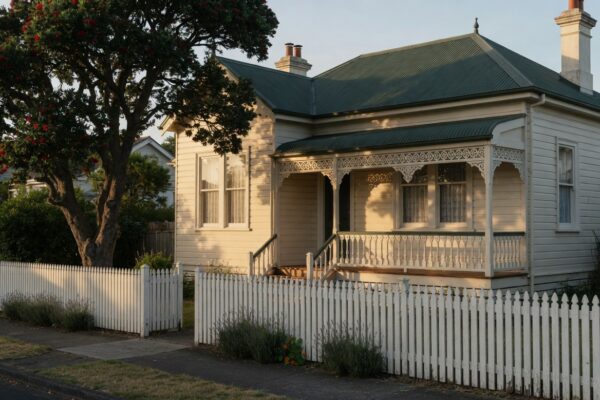
This is the contrarian one. A character villa on a 900m² section in Grey Lynn or Ponsonby is often worth more as a single freehold property with a beautiful garden than it would be as two awkward, sub-optimal lots. The land value calculation cuts both ways. Premium properties in premium suburbs frequently sell for more whole than divided. A property valuer, not just a surveyor, should weigh in before committing.
When the consenting timeline doesn’t fit your life
If you need to release capital in six months, subdivision isn’t the right tool. The 6–12 month minimum timeline assumes everything goes to plan, which is the exception not the rule. Duplex design options on an existing title, or selling the property whole and downsizing, can deliver capital in different timeframes.
The point of feasibility isn’t to tell every homeowner “yes”. It’s to give an honest read on whether this is the right move for this section, at this time, with this budget. Sometimes the honest answer is no.
How to Know if Your Section Is a Subdivision Candidate
The single most important question for any subdivision is whether your specific property can actually support it. Zoning, hazard overlays, infrastructure capacity and qualifying matters interact in ways that aren’t visible from the Auckland Unitary Plan map alone. Two sections on the same street can come back with completely different feasibility answers.
The four checks that matter:
Zone check — your section’s current zoning under the modified Auckland Unitary Plan, including any PC120 changes that have already taken effect. This determines the baseline development envelope and how many dwellings may be permitted as of right.
Hazard overlay check — flood, coastal erosion, coastal inundation, landslide. These rules have immediate legal effect since 3 November 2025. If any apply to your property, the development envelope is narrower than the zone alone would suggest, and intensification may be partially or fully off the table.
Qualifying matters check — heritage, Special Character Area, infrastructure capacity. These constrain intensification in identified locations and can change a permitted activity into a discretionary one requiring a notified consent.
Watercare check — does the wastewater network in your street have the capacity to take additional connections? In older parts of the isthmus, the answer is often no without contribution to upgrade.
This is exactly what our free feasibility report does. We pull your property up against all four layers, give you an honest read on what the development envelope actually looks like, and tell you whether subdivision is worth pursuing on your specific section. No fee, no obligation. If feasibility comes back negative, you’ve saved tens of thousands of dollars in design and consenting spend. If it comes back positive, you’ve started the project with a clear picture of what you’re working with.
➡ Request your free feasibility report
➡ Book a consultation with Sonder Architecture
➡ Read our MDRS-to-PC120 regulatory explainer
Working with Sonder on a Subdivision
Subdivision sits in the middle of a small team of specialists. The licensed cadastral surveyor handles the boundaries, scheme plan, s223 and s224c certificates, and LINZ lodgement. The planner prepares the resource consent application and represents the project to Auckland Council. The property lawyer handles titles, easements and any agreements with neighbours. Engineers handle stormwater, structural and traffic where needed.
Where Sonder Architecture fits is the design, feasibility and consenting strategy layer. We’re Licensed Building Practitioners in the Design Class (John Mao, Director — LBP Design Class), which means we can design Restricted Building Work — the structural and weathertightness work the Building Act 2004 requires an LBP to design or supervise — and produce the documentation Auckland Council requires for any associated building consents. We coordinate with the surveyor, planner and engineers on your project, run the architectural design through concept and detailed stages, and handle the consenting strategy end-to-end. The architect-vs-designer-vs-builder distinction matters here — for any subdivision that involves new dwellings or significant building work, an LBP Design Class designer is the right starting point.
Frequently Asked Questions
What is subdivision and is it still worth doing in Auckland in 2026?
Subdivision is the legal division of land into separate Records of Title issued by Land Information New Zealand. It remains worth considering in 2026 — Auckland's housing demand hasn't eased — but the regulatory framework changed materially in late 2025 when MDRS was withdrawn from Auckland and replaced by Plan Change 120. The economics still work on many sites. The feasibility check is more important than it used to be, because rule-of-thumb answers don't apply consistently anymore.
How much does it cost to subdivide a section in Auckland in 2026?
For a straightforward two-lot subdivision in standard Auckland, expect $140,000–$190,000 per lot, all-in, before construction. Investment Priority Area properties (Drury, Māngere, Mt Roskill, Tāmaki, Red Hills, Westgate, Whenuapai) add roughly $28,000 per lot for the higher Development Contribution rate. Complex sites with hazard overlays, hill country, or capacity-constrained streets can run $200,000–$280,000+ per lot. Construction is separate and varies by site, design and finish. Figures verified May 2026.
How long does the subdivision process take in Auckland?
Typically 6 to 12 months from feasibility to LINZ titles for a straightforward two-lot subdivision. Longer for sites with hazard overlays, infrastructure constraints, qualifying matters, or notified consents. The eight stages are feasibility (1–2 weeks), design and consenting strategy (12–16 weeks), resource consent (4–8 weeks non-notified), Engineering Plan Approval (4–8 weeks), building consent if needed (6–8 weeks), site works (4–6 weeks for bare land, longer with a new build), and final survey and titles (8–10 weeks). Most stages overlap.
What consents do I need to subdivide in Auckland?
Most subdivisions need a Subdivision Consent from Auckland Council. If your project breaches any Auckland Unitary Plan rules — height, setback, daylight, dwelling count — you'll also need a Land Use Consent. Both are types of resource consent and are often bundled. Any associated construction also needs a Building Consent. Since 9 October 2025, the MDRS three-units-as-permitted-activity pathway no longer applies in Auckland, so every project now needs case-by-case feasibility under PC120 and the modified Auckland Unitary Plan.
What happens if my property was downzoned under PC120?
Around 12,000 Auckland properties were downzoned under Plan Change 120 due to flood, coastal erosion, coastal inundation, or landslide risk. These rules took immediate legal effect on 3 November 2025 under section 86B(3) of the Resource Management Act 1991. Check your property in the Auckland Council PC120 map viewer. Downzoning doesn't always rule out subdivision but can materially narrow what's possible — limiting building locations, requiring raised floor levels, or removing intensification rights entirely on some sites.
Can I still build three homes on my Auckland section?
Sometimes, but it now depends on your specific zoning and overlays. Many sites previously eligible for MDRS three-unit development fall into the modified Mixed Housing Urban zone under PC120, where 3×3 development remains a permitted activity. Sites affected by hazard overlays, heritage or Special Character protections, or other qualifying matters may not. A property-specific feasibility check against the current Auckland Council PC120 maps is the only reliable answer in 2026.
What are the biggest risks of subdividing in Auckland?
Six risks come up repeatedly: zoning misreads under the new PC120 framework; hidden site issues like soil, slope, flooding and contamination; PC120 hazard overlays affecting around 12,000 Auckland properties; Watercare wastewater capacity constraints, particularly in older parts of the isthmus; qualifying matters like heritage and Special Character protections; and cost creep with consenting delays. The fix for all six is the same — rigorous feasibility up front, before significant money has been spent on design or applications.
When does subdivision not make sense?
Four common scenarios. When the resulting new lot won't sell for materially more than the subdivision spend, the project is destroying value. When hazard overlays or qualifying matters rule out the second dwelling. When the property is more valuable un-subdivided — common with character villas on prime sites in suburbs like Grey Lynn or Remuera. And when the 6–12 month timeline doesn't fit the homeowner's actual capital release needs. A minor residential unit or a renovation can sometimes deliver a similar outcome with much less complexity.
Do I need an architect to subdivide my section?
Not strictly for a bare-land subdivision — a licensed cadastral surveyor and a planner can run the consenting on a simple two-lot subdivision. But if the project involves new dwellings, retaining walls, or any building work, you'll need a Licensed Building Practitioner Design Class to design Restricted Building Work and produce the documentation Auckland Council requires for building consent. Most homeowners involve an architectural designer early because the feasibility, site design and consenting strategy benefit from being integrated from day one.